
Digital Product Design & UX/UI
Description
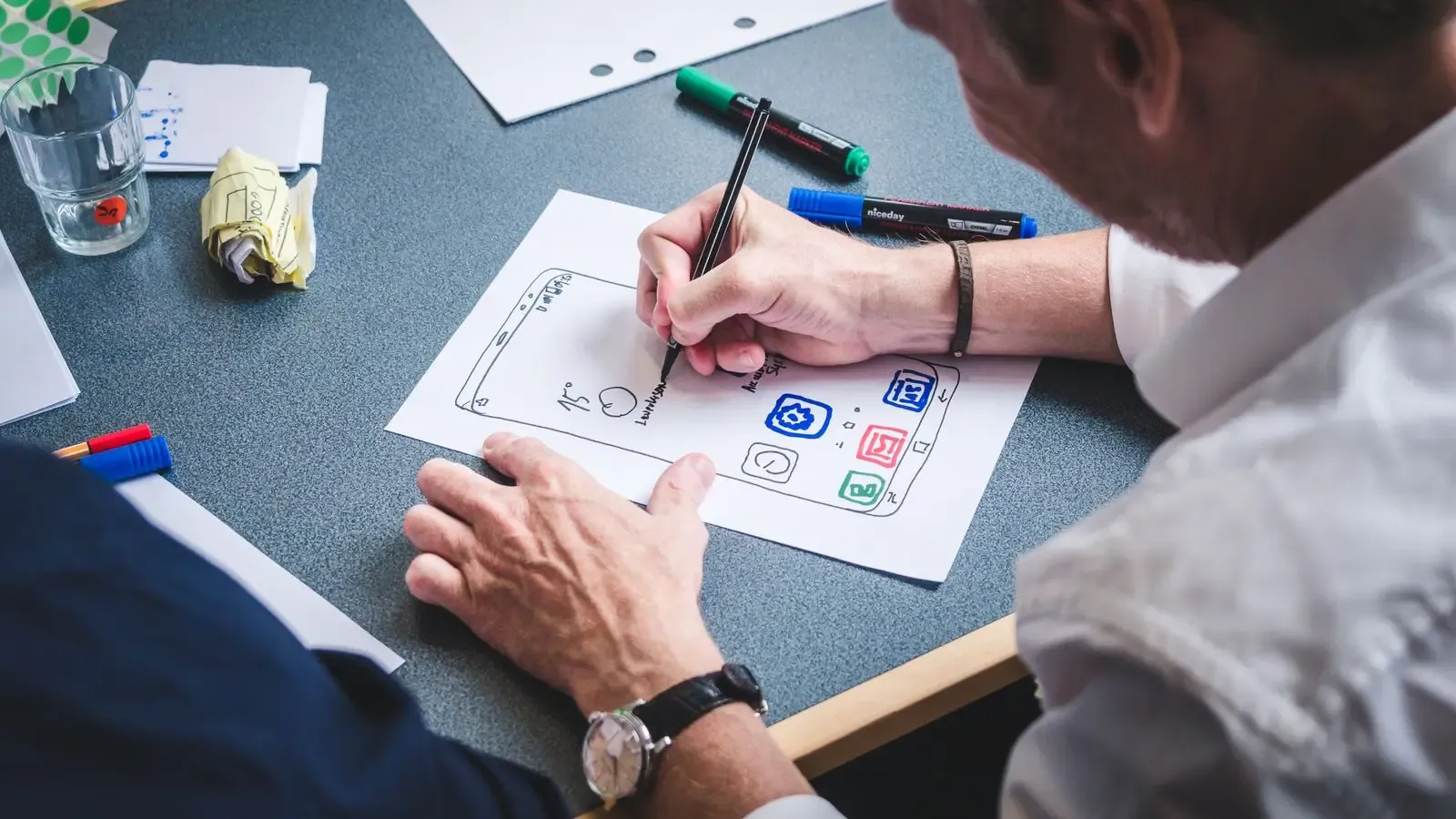
Good interfaces are not created at the end of a project but at its start. We first establish who the users are, what task they are trying to complete and where they fail today — and translate that into information architecture, user flows and wireframes before any development effort begins.
Wireframes become clickable prototypes that we test with real users. Only once the interaction holds up does UI design follow: visual hierarchy, states, error messages, accessibility and a design system built for reuse.
What we hand over is not an image file but a specification ready for development: components, spacing, behaviour, edge cases. This removes exactly the coordination loops that would otherwise surface during implementation.
A particular focus lies on tools that guide users to a result: calculators, configurators, assessments and self-service journeys. There, design decides whether someone reaches the end or drops out along the way.
Benefits
- Validated assumptions before development budget is committed
- Less rework thanks to early testing on the prototype
- Shorter coordination paths between business and engineering
- Higher completion rates in forms and application journeys
- Consistent interfaces through a reusable design system
- Accessibility built in from the start rather than retrofitted
- A development-ready handover with no room for interpretation
- Measurable usability instead of debates about taste
Outcomes
- Researched user needs, documented in journeys and user flows
- Wireframes and clickable prototypes, tested with real users
- Finished UI design including states, edge cases and error messages
- A design system that can be reused across further applications
- A handover that lets engineering start without follow-up questions
Importance of Digital Product Design & UX/UI
Poor usability is rarely a matter of taste — it is a cost issue: drop-offs in application journeys, support requests, training effort, unused features. Each of these can be measured, and each originates long before the first line of code, namely in the design.
Testing assumptions early on a prototype costs a fraction of correcting the same assumption in a finished application. That is why design comes before implementation in our work — not as polish afterwards.
Contact Us
You want to know more?
Feel free to contact us anytime – we are here to support you and look forward to speaking with you.
Contact formServices
AI Automation & Analytics Solutions

AI Strategy, AI Automation & RPA
Unleash the potential of your data with AI automation.
Learn more
Business Analytics, Requirement Engineering & Product Ownership
We define a clear AI strategy and automate your processes with AI-driven workflows and RPA. Through intelligent models, automated operations and data-driven decision-making, we reduce manual work, increase efficiency and create scalable digital processes.
Learn more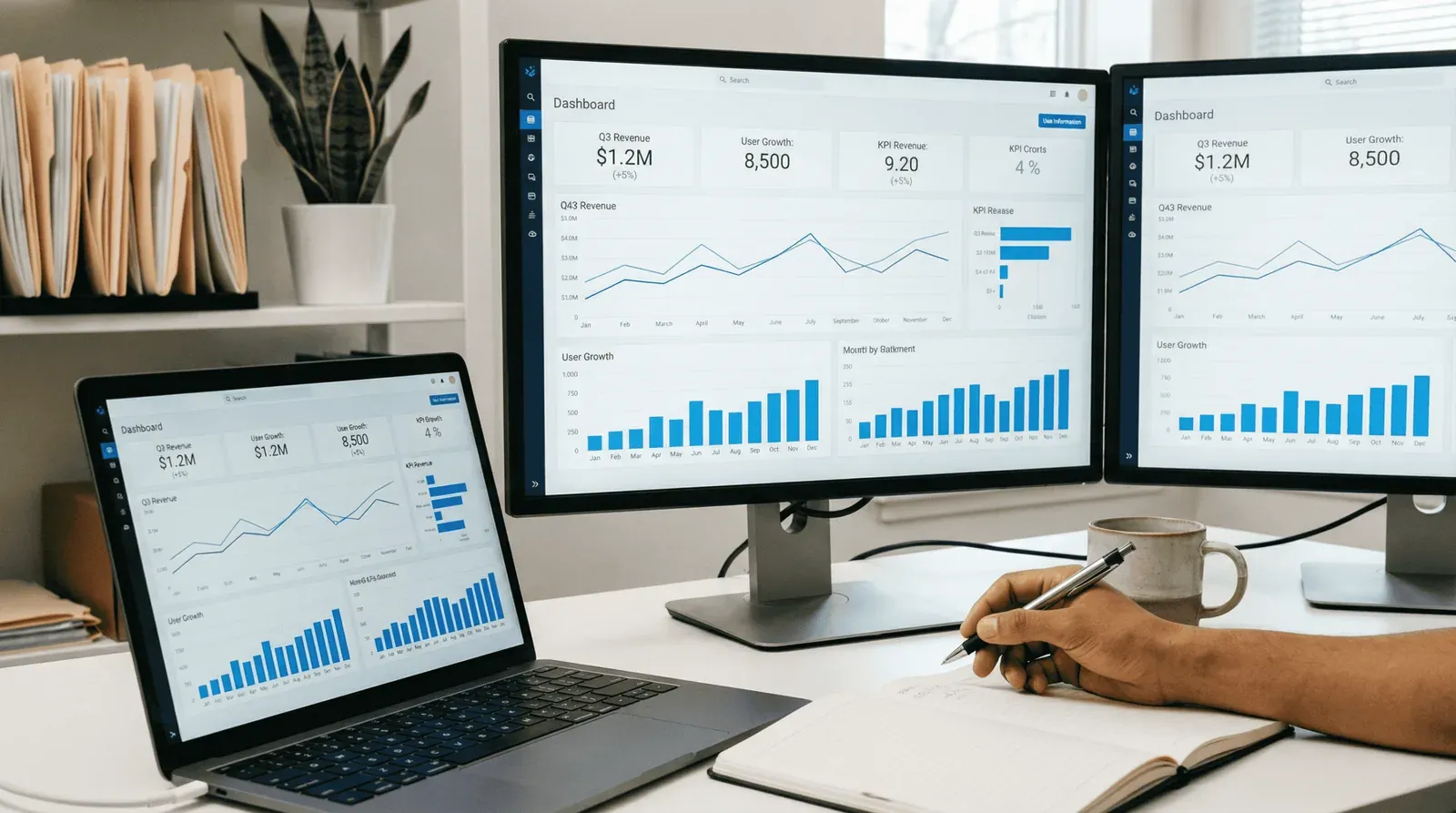
Business Intelligence
We analyze business processes, define clear requirements and, if needed, take on product owner responsibilities such as prioritization, backlog management and stakeholder alignment—creating structure, clarity and maximum business value.
Learn more
Data Analytics & Data Science
We develop BI architectures and dashboards that enable reliable KPIs and data-driven decision-making.
Learn more
International Business Advisory & Project Management
We analyze your data, uncover patterns and trends, and enhance these insights with data science methods such as predictive models, segmentation and statistical analysis. This provides clear insights, accurate forecasts and deeper understanding of customers, processes and markets.
Learn more